19 Proofreading Tips for WordPress Bloggers (Write Better Content)
- Category : Marketing
- Posted on : Sep 25, 2018
- Views : 3,414
- By : Edgardo D.

Proofreading is something that is often not given the priority it deserves. It’s easy to leave it to the last minute, and then be forced into doing it quickly. But proofreading is important and should be seen as a crucial step in the writing process that requires a good block of time. ⌛
There’s nothing worse than creating a really interesting blog post, only to realize once it’s gone up that you’ve missed some mistakes. Proofreading doesn’t have to be difficult, it just requires time and a few good strategies. Here are some good ways to proofread your WordPress blog.
1. Proofread in the Morning
Okay, so not everyone is a morning person. Regardless of what your schedule is like, do your proofreading early in the day. Doing your proofreading at the start of your workday means you’re going to be more alert and wide awake. Don’t proofread if you’re tired, you’re a lot more likely to miss something or make a mistake. A lot of people find themselves getting drowsy in the afternoon as their caffeine begins to wear off.

Bottom line: whenever it is that you’re most awake, that is the time to proofread.
2. Take a Break and Come Back to It
As Madeline Jones, proofreader at Academized writes:
Once you’ve finished writing and feel like you are ready to start editing, it’s a good idea to walk away for a little while. Right now your brain is way too accustomed to what you’ve been writing to do a proper editing job.
You’ll be highly likely to miss some mistakes because you’ve been looking at this piece of writing for a while. Come back with fresh eyes a few hours later, or even a few days later, if you have the luxury. Editing with fresh eyes allows you to actually look at the words with a sense of detachment, reading what is there, instead of what you meant to write.
This is especially important on those super long 10,000+ word content pieces! ?
3. Pay Special Attention to Punctuation
Bad punctuation just looks bad. Watch out for misplaced apostrophes and periods. Semicolons are also one thing that a lot of people seem to struggle with. Remember that a semicolon is used to link two closely related independent clauses in a single sentence.
Here’s an example:
I have a massive blog post due tomorrow; I can’t play Xbox tonight.
The two clauses above are separated by a semicolon, but could work as their own sentences if you put a period between them instead:
I have a massive blog post due tomorrow. I can’t play Xbox tonight.
If you find them confusing, it’s best just to avoid them. You can write a perfectly good blog post without using a single semicolon.
Another one bloggers sometimes struggle with is which words to capitalize in a title or header. There are four main title capitalization styles: Chicago style, APA style, MLA style, and AP style. There’s no right or wrong selection but choose one and stick with it so your writing all feels the same. You can always double check your work in a free online tool like Capitalize My Title. Bookmark this in your browser for when you’re writing.
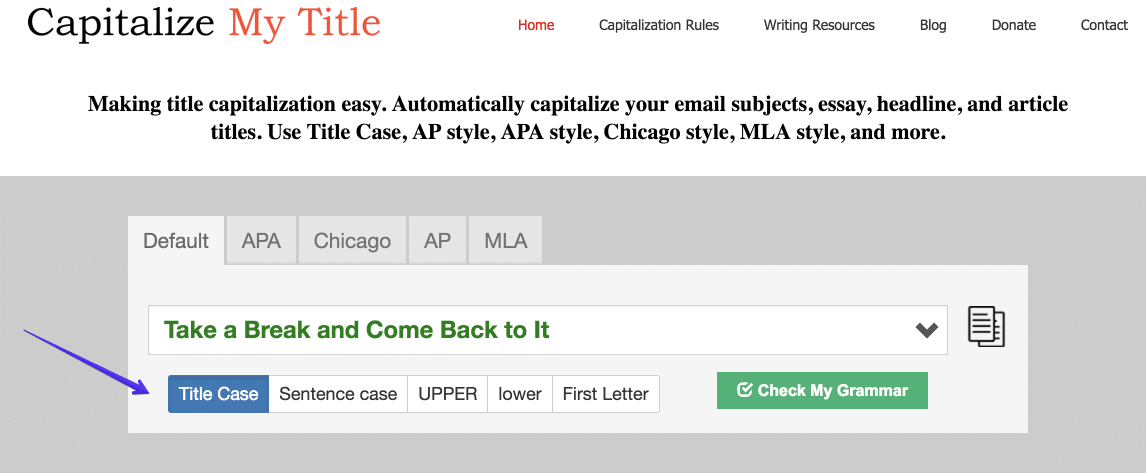
Correct use of punctuation makes all the difference in a piece of writing.
4. Follow Along with Your Finger or Mouse
One of the most important things involved in effective proofreading is to read slowly. A lot of people struggle with that, but there are ways to slow things down. One way is to point at each word with your index finger as you read. Another popular habit some writers use is to highlight the words with their mouse as they go. By doing this, you’ll be able to focus on each word.
The natural impulse is to breeze through your document as you proofread. You feel like you’re almost done and you just need to quickly go over your work before you submit it. Slow things down, you’ll thank yourself later. ?
5. Get Rid of Distractions and Stay Focused
Yolanda Fite, editor at AustralianHelp suggests the following:
Do your proofreading in a quiet place that is free of distractions. Turn off your cell phone, pull yourself away from social media, and turn off the TV. Place yourself in an environment where you are unlikely to be interrupted.
Sometimes that might even mean disconnecting from the internet altogether, printing off your document, closing the laptop, and editing with a pen. It’s also a good idea to have a clearly defined editing time, as opposed to editing on the go. If you edit as you go, you’re going to be constantly switching modes back and forth from writing to editing. Switching modes like that can be distracting and lead to things getting missed.
It’s also easy to drift off and not completely focus while you’re proofreading. If you find your mind wandering off as you’re editing, then you need to find a way to get yourself refocused. You can’t proofread well if you’re only partially paying attention. Proofreading is one time when you need to be sharp because it’s very easy to miss an error. Monitor yourself, and if you find yourself drifting away, it’s important to go back and re-examine the section you were proofreading.
Try tapping your foot or hand as you read each word to stay focused. Sometimes you just need to get up and stretch, get some fresh air, and come back a few minutes later. It’s often tempting to want to just push on until you’re finished, but the quality of your post will suffer if you’re proofreading it while tired or distracted.
Sometimes it helps to take notes as you write, so that you remain in writing mode and don’t become distracted and lose your flow or train of thought. It’s a lot easier to just come back later, look at the notes, and then make your corrections.
6. Be Sure You Have Permission to Use the Material
Your blog can really benefit from including material from other people whose knowledge and opinions you respect. Just be sure it’s okay before using it to enhance your blog post. It should go without saying, but plagiarism is not okay. If you’re going to use someone else’s material you need to cite them as the original author or ask their permission if you’re unsure.
7. Figure out What Your Weaknesses Are
Find out what your most frequent errors are. Even experienced writers will tell you that they have specific errors they tend towards. Maybe you have problems mixing up “two,” “too,” and “to,” or you have a bad habit of placing the apostrophe incorrectly. Whatever your weaknesses are, the most important thing is that you identify them so you can pay special attention to watching out for them as you proofread.
Start working on a list of your common mistakes, and keep it with you as you proofread as a reminder. Having the list handy will also save you the trouble of looking it up online. Google Keep and Evernote are great for these types of lists.
8. Have Someone Else Read Over Your Work
If you can, have a friend, coworker, or family member read over your post. There’s nothing like a truly fresh pair of eyes looking over your writing. Someone who is unfamiliar with the subject material is much more likely to identify inconsistencies or areas that require more explanation. Because you’re so familiar with your writing and it’s topic, your brain can easily fill in spots where your post lacks explanation. Bring in someone who is unfamiliar and they will be able to give you feedback that will make your post more accessible to the average reader.
9. Read It Out Loud
Cornelia Jefferson, writer at PaperFellows advises:
Read your writing aloud rather than silently. Reading it out loud will help you identify sentences that don’t flow well, or are just generally awkward to read. It’s also a good way to determine which of your sentences are too long.
Editing by reading silently in your head is much less likely to find these kinds of deficiencies. It is much more obvious when reading aloud that something is wrong. By reading out loud you are putting yourself in your reader’s position and that makes for writing that is more easily understandable and enjoyable.
10. Change the Font
It sounds very simple, but sometimes a simple change is all you need. Try changing the font or printing your post before you edit it. Your eyes have become very accustomed to the font you’ve typed in. You’ve been looking at that font for hours, so change things up a bit so that you’re looking at it fresh. You can try changing the margins as well. What matters is that the writing looks different, so that you can approach it as something you haven’t seen before. It’s easy to start skimming your post without meaning to, because you’ve looked at it so many times.
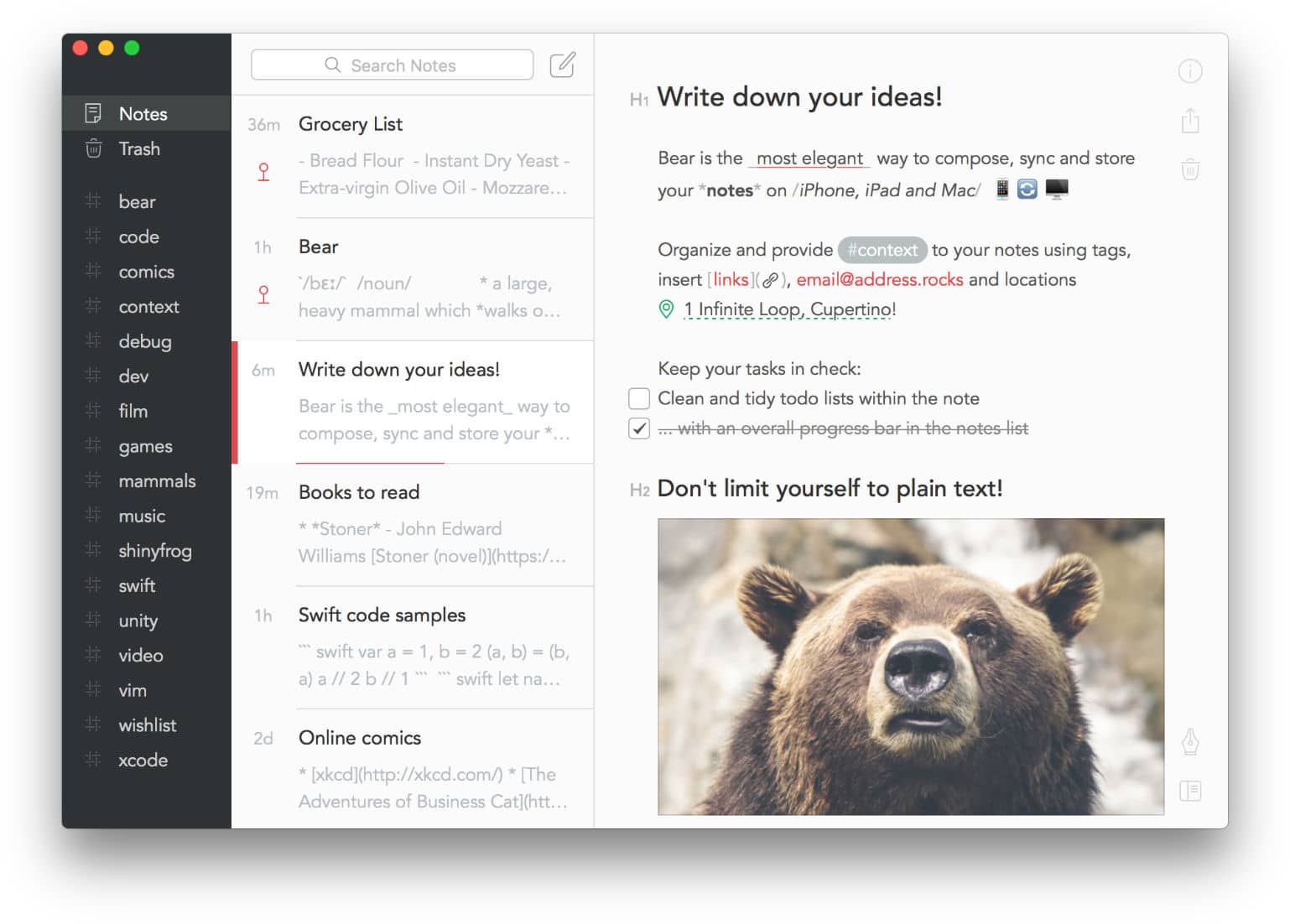
Sometimes it can be good to break out of the WordPress editor and use a different tool.? For those of you on MacOS, the Bear app is awesome and fonts are beautiful! It can also export to markdown, HTML, etc. for an easy transfer to WordPress. Or you could try diving into Gutenberg.
11. Double Check Your Prepositions
Prepositions are words such as under, on, with, and after. They are used to describe the position of something, the time something happened, and the way something is done. Prepositions can be difficult, especially if English is not your first language, because they are not necessarily logical. Did the couple arrive on Sunday, or did they arrive in Sunday? If you’re having trouble, tools like Google Ngram Viewer can show you on a graph which way is the most commonly used. You should also consult a dictionary if you’re unsure about the meaning of a word and how to use it.
12. Proofread in Stages
One good way to avoid missing errors is to proofread in stages, rather than trying to watch for everything at once. Proofread once for spelling errors, then again for flow, again for punctuation, again for grammar, and so on. Concentrating on one type of error at a time should give you a much higher rate of accuracy. Create a system so that you don’t miss anything. Just make sure you’ve given yourself plenty of time because this method will obviously be more time-consuming.
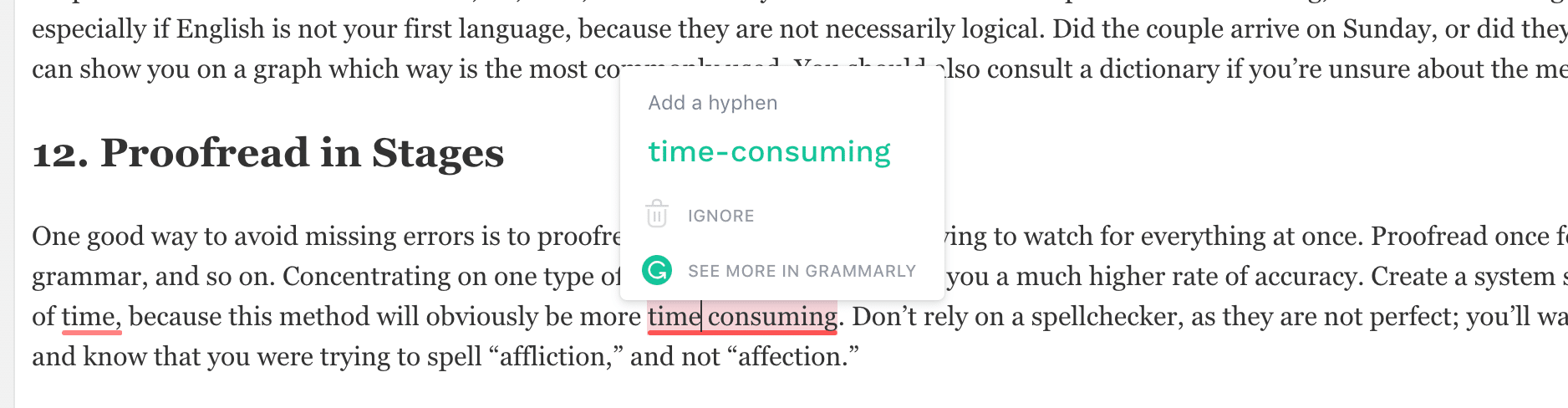
Don’t rely 100% on a spellchecker, as they are not perfect; you’ll want to make spelling one of your stages. A spellchecker can’t read your mind and know that you were trying to spell “affliction,” and not “affection.” Although tools like Grammarly can help aid in spotting common errors as you go. Especially if you’re proofreading when you’re not most awake. But remember, you shouldn’t do this. ?
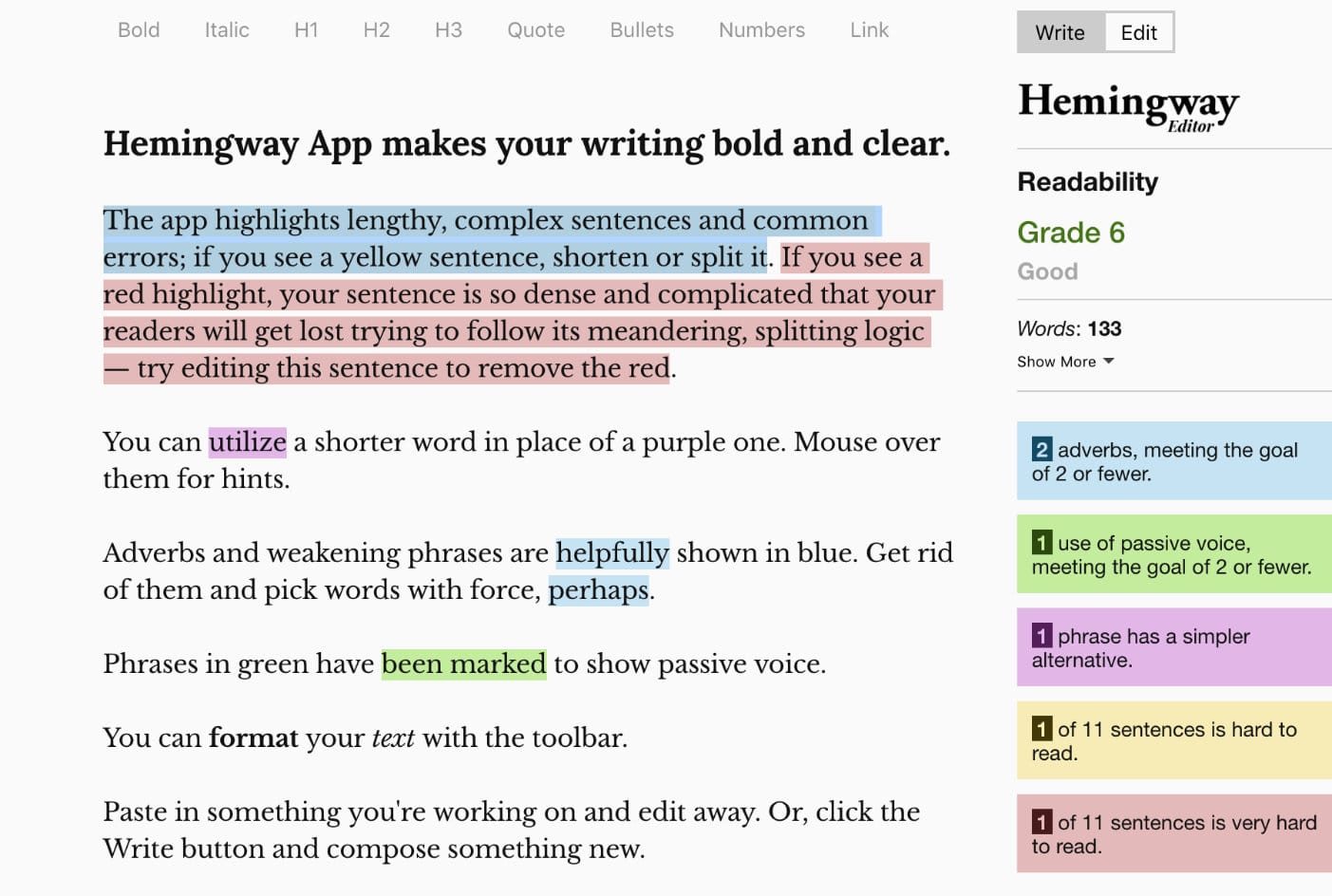
Another great little tool you should check out is the Hemingway Editor. It highlights lengthy, complex sentences and common errors.
13. Watch Your Contractions
Is it they’re or their? Most writers know the difference, but when you’re typing out thousands of words in a day, mistakes happen, and spellcheck won’t flag them. Keep your eye out for your/you’re and other contractions. Missing them can really make your writing seem amateurish. The grammar police will find you! ?

14. Try Reading It Backward
One good way to proofread is to simply read your post backward. When you read backward, there is no flow and so you are concentrating on each individual word. You will be able to focus on the correct spelling of each word instead of being distracted by what the sentence is about. This method does take quite a bit of time, so it’s just one more reason to prioritize finishing your writing well ahead of time so you have ample time for proofreading.
15. Online Resources Can Help You Proofread
Proofreading is something that few people enjoy doing, but it’s an important skill for any writer to have. It’s common to struggle with proofreading, but there are plenty of resources out there you can use to improve your skills.
- StateofWriting and MyWritingWay
- Try out these writing guides to make your writing process more organized and manageable. Writing involves quite a few steps, and working your way through them is key to creating a solid piece of writing you can be proud of. These guides will make your writing process simpler and easier.
- Essayroo and BigAssignments
- Proofreading is often done as an afterthought, as something to be rushed and completed at the last minute. But it is just as important as any step in the writing process. These are editing tools that are suggested by Revieweal. You would be amazed at the difference between editing on your own and editing with the help of some experts.
- ViaWriting and StudyDemic
- Grammar is something a lot of good writers have problems with. There are a lot of rules to remember and it’s easy to make a mistake. These grammar resources can help you by checking over your writing to make sure everything looks professional.
- Boomessays and UKWritings
- Simple Grad in Boomessays review has endorsed these online proofreading resources. Don’t risk leaving a typo or two in your blog post, these tools can guarantee your writing is flawless. Even if you’ve written an amazing and informing post, if there are mistakes, the effect just won’t be the same on the reader. Use these tools to make sure your posts are as technically impressive as they are interesting and valuable.
- WritingPopulist and LetsGoandLearn
- One of the best ways to learn is to see what other writers are doing. These proofreading blogs are full of information and experiences of writers with proofreading. Learn from their mistakes and use the lessons to improve your proofreading process.
16. Headings, Titles, and Lists
A lot of people forget to go over and proofread their headings, titles, and lists. Make sure you proofread everything. For some, it helps to make these one of the proofreading stages, to ensure they are not forgotten. Headings and titles are easy to forget, but if there is an error, it will be completely obvious to people reading it. Don’t forget to double check any lists in your post and ensure the numbers are in the correct order, and that there are no missing numbers.
17. Those Last Minute Changes
Sometimes when you’re in the proofreading stage, you realize that you need to add a sentence or two for clarity. When doing this it’s important that you go back and reread the paragraph to make sure everything fits. It’s common for writers to add information and then forget to go back and adjust other related words in the paragraph. Make sure you edit those additional sentences you add in at the proofreading stage.
18. Double Check Your Facts, Names, and Places
It’s important you get your facts right. Tools like spellchecker can’t help you here. You need to do some fact checking. Make sure you’ve used the correct names for any places or people you’ve mentioned in your post. If you’re citing statistics, make sure you’ve got them right and have included proper citations.
Your post can be totally undermined if you forget to do this, and leave your reader with the impression that you don’t even know what the capital of Australia is (hint: it’s not Sydney ?) A quick fact-checking step doesn’t need to take much time and can make all the difference in terms of your credibility. Just be sure you’ve got some quality sources you can rely on.
19. Don’t Forget Your Formatting
Do your formatting at the end, but just be sure you don’t forget it. Go over and make sure your paragraph spacing, bullets, lists, text wrap, indentations, and so on are all formatted correctly. You’ll want to leave this step for the end, because things can shift around during the proofreading process. Keep your formatting consistent. If you make a headline bold once, keep doing that throughout your article. Pick a style you like and stick to it.
Summary
Proofreading doesn’t have to be difficult. If you give yourself ample time and use a few strategies, your blog posts will be professional. Find out what your weaknesses are, and focus on those areas specifically. Take a break once you’ve finished writing before you begin to proofread. Watch out for contractions, formatting, and prepositions.
Learn how to slow down and read each word individually. If that means pointing with your index finger, or reading it all backward, then that’s fine. Don’t let a subpar proofreading process undermine what could have been a great blog post. Get into the habit of leaving ample time to polish your blog post before submission. Figure out what works for you, and be prepared to invest some time into your proofreading process.
Have any other proofreading tips or tricks you use when writing your blog posts? Let us know what they are below in the comments.
Categories
Subscribe Now
10,000 successful online businessmen like to have our content directly delivered to their inbox. Subscribe to our newsletter!Archive Calendar

| Sat | Sun | Mon | Tue | Wed | Thu | Fri |
|---|---|---|---|---|---|---|
| 1 | 2 | |||||
| 3 | 4 | 5 | 6 | 7 | 8 | 9 |
| 10 | 11 | 12 | 13 | 14 | 15 | 16 |
| 17 | 18 | 19 | 20 | 21 | 22 | 23 |
| 24 | 25 | 26 | 27 | 28 | 29 | 30 |
| 31 | ||||||
Recent Articles
-

Posted on : Jul 25
-

Posted on : Jul 07
-

Posted on : Apr 07
-

Posted on : Mar 19
Optimized my.cnf configuration for MySQL 8 (on cPanel/WHM servers)
Tags
- layer 7
- tweak
- kill
- process
- sql
- Knowledge
- vpn
- seo vpn
- wireguard
- webmail
- ddos mitigation
- attack
- ddos
- DMARC
- server load
- Development
- nginx
- php-fpm
- cheap vpn
- Hosting Security
- xampp
- Plesk
- cpulimit
- VPS Hosting
- smtp
- smtp relay
- exim
- Comparison
- cpu
- WHM
- mariadb
- encryption
- sysstat
- optimize
- Link Building
- apache
- centos
- Small Business
- VPS
- Error
- SSD Hosting
- Networking
- optimization
- DNS
- mysql
- ubuntu
- Linux