B2B vs B2C Marketing – Understanding the Differences Is Key
- Category : Marketing
- Posted on : May 01, 2019
- Views : 3,415
- By : Tadashi P.
Business to business (B2B) marketing isn’t all that different from business to consumer (B2C) at the end of the day. On the surface, it seems like one would be more logical while the other is more emotional. However, as you’ll soon learn, that’s not always the case.
But there are a few big differences between B2B vs B2C marketing. And those key differences have the power to make or break your results. It’s not always as simple as using LinkedIn or Facebook depending on who you’re targeting. But it does have a huge impact on how you can target them, what works vs. what doesn’t, and how much you can afford to pay.
Here are a few of the major differences between B2B vs B2C marketing to fail-proof your campaigns.
- B2B Marketing Has More in Common with B2C than You Might Think
- B2B Sales Cycles are Much Longer than B2C (on Average)
- B2B Companies Can Spend More than B2C to Acquire Each Customer
B2B Marketing Has More in Common with B2C Than You Might Think
B2B marketing is often seen as wildly different than B2C. There are a few key differences between the two that we’ll explore in a few minutes.
Are B2C vs. B2B purchases really all that different at the end of the day?
You know the standard argument. Tons of “B2B vs B2C” articles, like this one, say something like
there is little to no personal emotion involved in the purchasing decision.
But is that true? After all, people are still buying. Decision making in companies still come down to a few people making gut choices. And when you look at the data, the differences between B2B and B2C consumers might not be as different as it initially appears.
For instance, the vast majority of B2B purchases (84%) still start with a personal referral. Same as all consumer purchases, where 92% start with a trusted referral.
Review sites are also critical to most purchases. 95% of buyers use them, while 92% of B2B buyers are more likely to buy after reading a review, too.
So… these ‘referrals’ are happening on ‘professional’ places like LinkedIn. Right? Wrong. According to the 2018 annual industry report from Social Media Examiner, 91% of B2B businesses use Facebook over LinkedIn.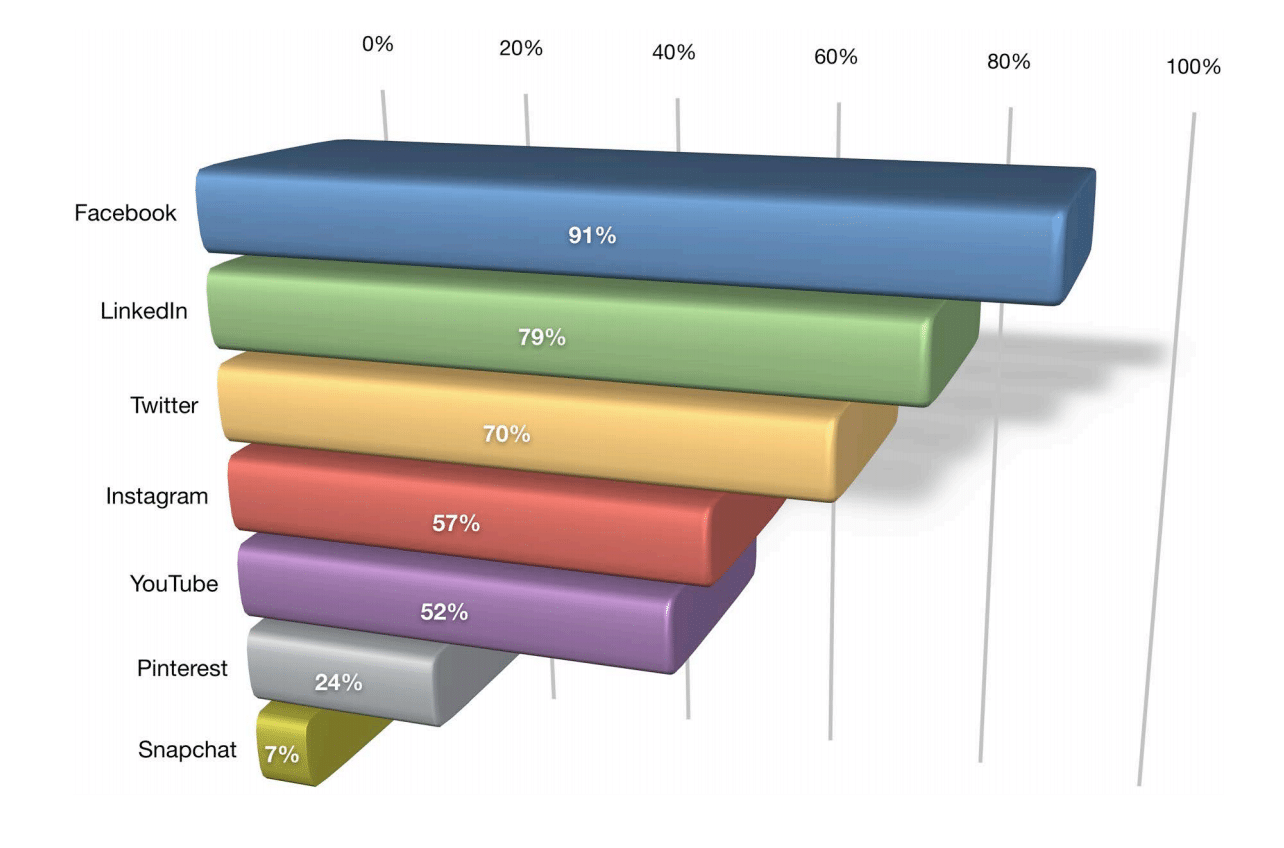
In other words, both B2B and B2C buyers shop in a pretty similar fashion. But… B2B buyers shop without emotion, right? Just like that article said!
Except, that’s not entirely true, either. In fact, the exact opposite might be.
Several other studies about the B2B purchasing process have shown how critical soft skills are to getting a deal over the line. According to CMO.com,
On average, B2B customers are significantly more emotionally connected to their vendors and service providers than consumers.
Turns out that B2B buyers crave certainty. And certainty is a feeling that comes directly from establishing some trust (or emotional connection).
The reasons behind the choices we make aren’t easily measured…
Confirms Christoph Becker to Chief Marketer, who’s gyro firm partnered with the Financial Times to study B2B buyers.
Real people are tribal and emotional. Now, more than ever, marketers must focus on what their customers and prospects are feeling and deliver in a way that makes them feel both confident and optimistic.
According to the Harvard Business Review, is trend is becoming even more pronounced:
As B2B offerings become ever more commoditized, the subjective, sometimes quite personal concerns that business customers bring to the purchase process are increasingly important. Indeed, our research shows that with some purchases, considerations such as whether a product can enhance the buyer’s reputation or reduce anxiety play a large role.
They’ve highlighted research done by Bain & Company about all the different factors that influence a B2B purchase, and put them together in this beautiful diagram:
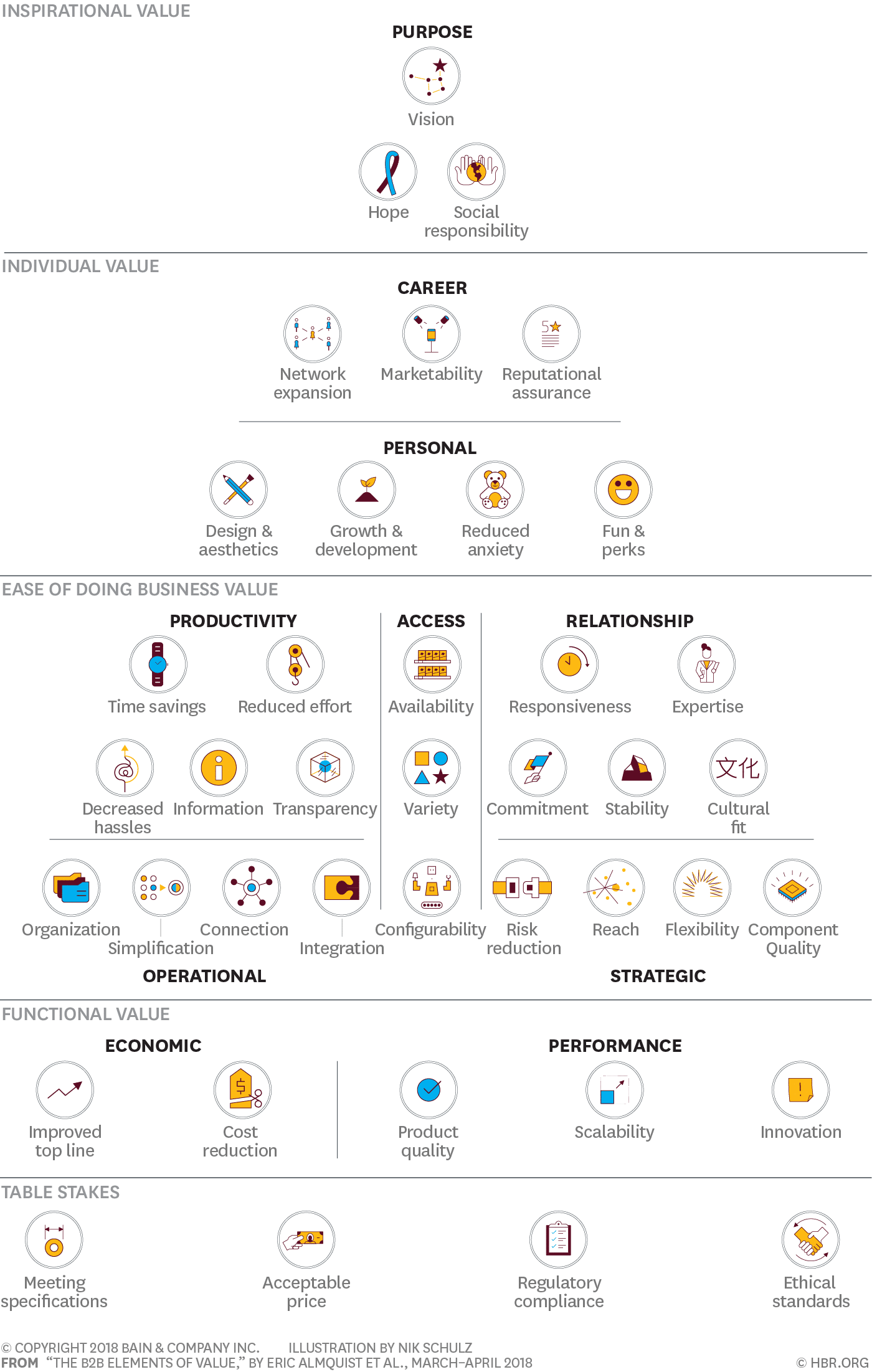
When you look at the bottom, you see the typical considerations like compliance, ethical guidelines, specs, and pricing. These are the hard, rational items that would appeal to logical buyers.
However, as you move higher in the pyramid, you’ll quickly see how those objective measures give way to more subjective, touchy-feely things.
In other words, yes, there are a few specific things B2B buyers look to make sure a vendor or partner is in the right ballpark. But after that, it becomes more about who’s a better ‘fit’ than which one is providing the lowest price.
Net Promoter Scores (NPS) in the same research back up this up, too. Only three of the top ten factors for B2B loyalty fall in the logical camp. The other seven are all more subjective metrics rooted in emotion.
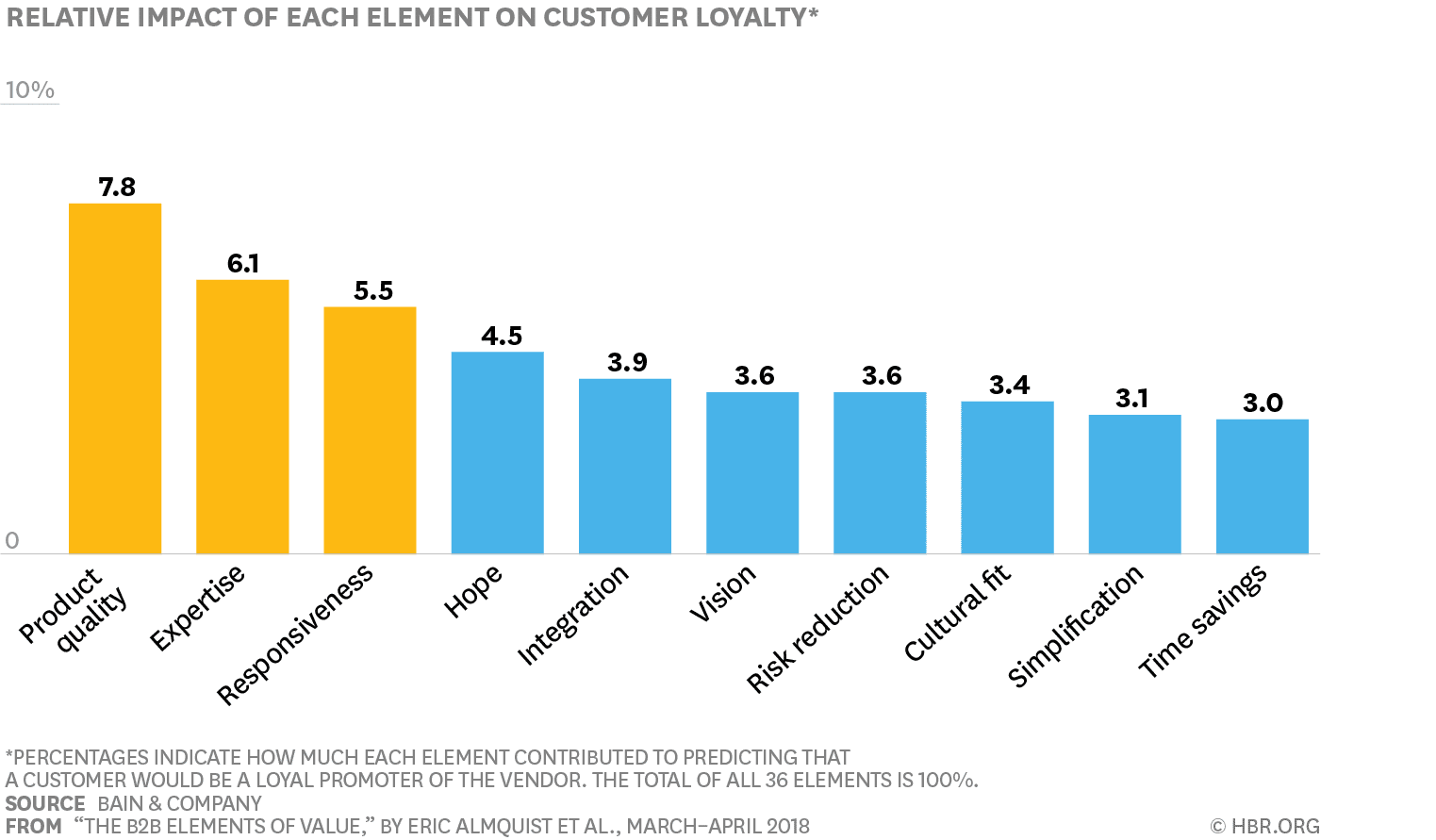
So that whole “B2B buyers purchase solely based on logic and numbers” is not all that true at the end of the day. These purchases are a lot more emotional than you might think.
What’s different is how, specifically, these buyers buy. And then what you’re able to do to drive more of them, which includes everything from where you’ll find them, to how you attract them, to how much you can spend to acquire each one.
And that’s what we’re going to dive headfirst into now, starting with the time it takes to make a purchasing decision.
B2B Sales Cycles are Much Longer than B2C (on Average)
A B2C purchase doesn’t often take that long to materialize.
Yes, $10,000+ vacations might. $50,000+ car purchases or $500,000 houses fall in the same camp. These purchasing decisions might take weeks (or months) to materialize.
But these are often rare events in most people’s lives. Most consumer purchases throughout the course of a year fall in the ~$100 range. And these can often be made on impulse without too much thought, research, or in-depth analysis.
The same can’t be said for B2B purchases, though. At least 31% of respondents in one study confirmed that B2B purchases are taking significantly longer than even just a year ago. In other words, B2B sales cycles might take weeks or months to unfold.
And this directly impacts how you attract awareness, generate leads, or even drive sales.
Take Facebook ads. We already saw how B2B buyers prefer Facebook over LinkedIn. Yet, if that’s the case, why do so many businesses claim that “Facebook ads don’t work”?
Maybe they’re just doing it wrong. They’re trying to promote a big purchase to a cold audience who’s not remotely ready to buy.
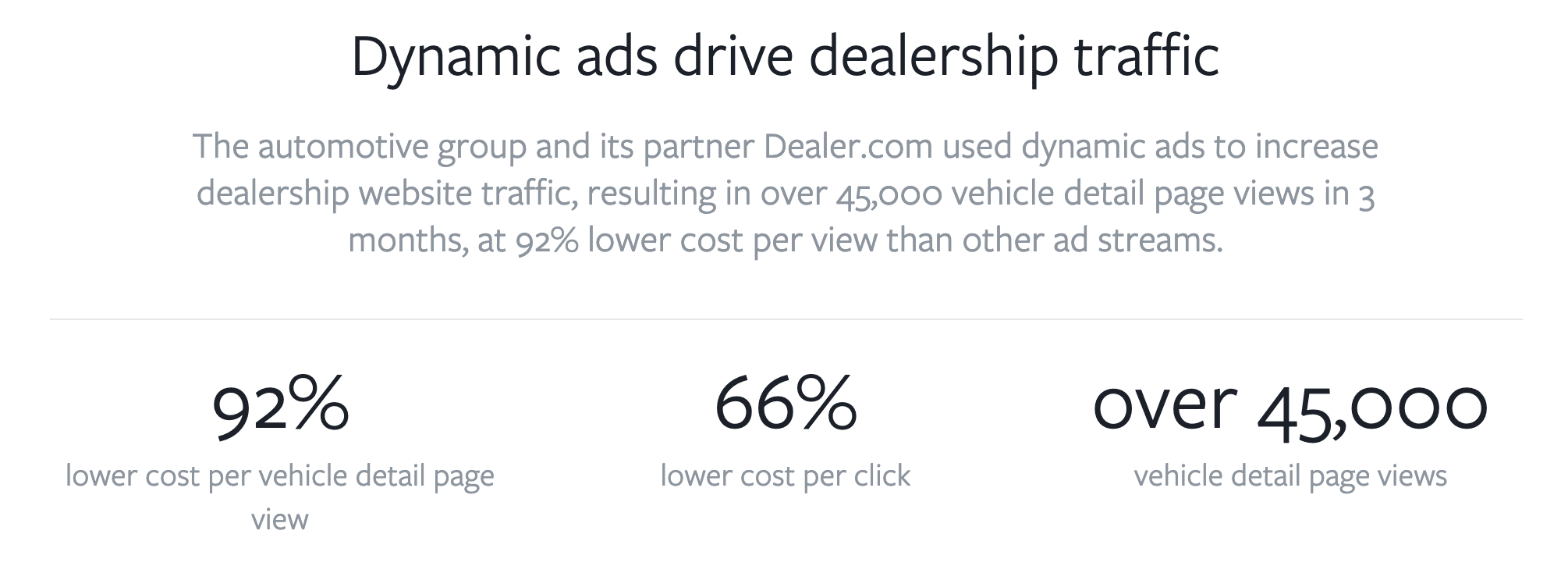
It’d be like selling a car off an ad. Yes, you can use it like Darcars and Dealer.com did to drive a ton of exposure with 45,000 vehicle detail page views. But people aren’t exactly going to swipe a credit card, either. You just want to get these people onto your lot or into your store.
Before you can sell the new six-figure deal, however, B2B buyers need to not just have a problem you can fix, but they also need to realize they have this problem in the first place.
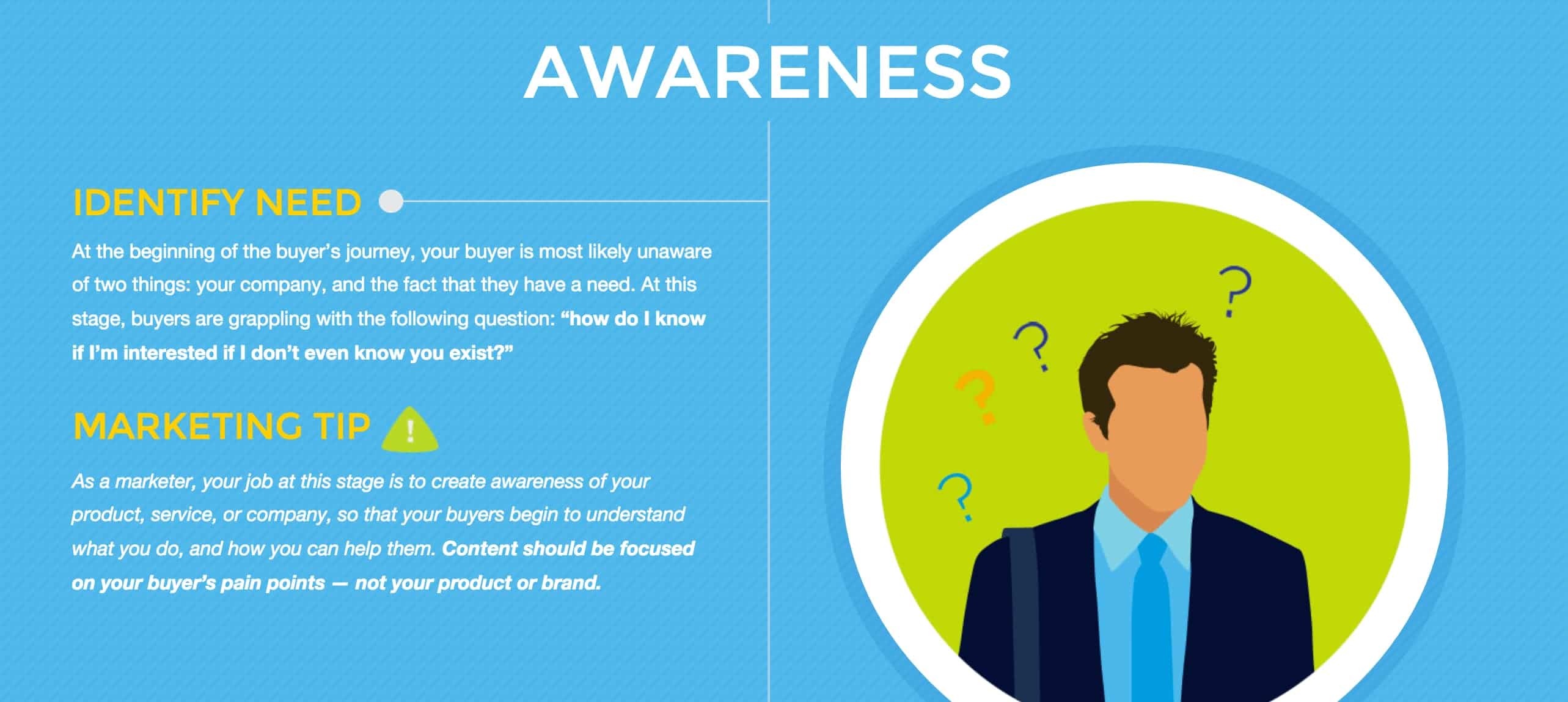
The ‘buyer’s journey’ becomes even more important in long, drawn our purchase processes.
Let’s say you’re traveling this Saturday. You’re visiting a new city, so you need a hotel. Easy. Pull up Expedia, punch in the dates, sort by star rating, review three hotels within your 4-star budget range, and pull the trigger. All of this takes maybe an hour to play out.
Now, contrast that to B2B purchase processes. The same steps play out, but over a few weeks (as opposed to a few hours).
That means you need a much, much slower ramp from attention to interest to purchase. Online, that often means lots and lots of additional value-building content so your B2B prospects will eventually understand why you cost 2X everyone else (when it gets to that).
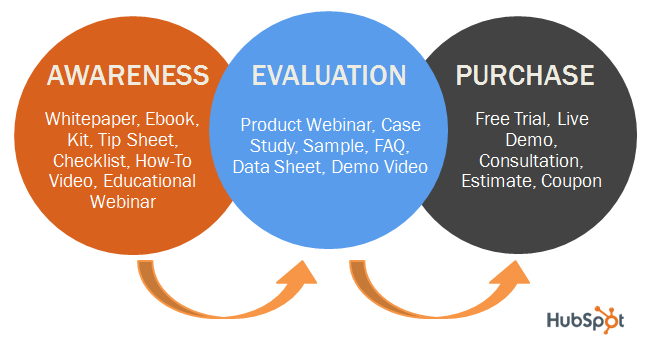
So you might start with an ebook that targets the initial problem that crops up in their life. Even something simple, like how to create better email marketing campaigns.
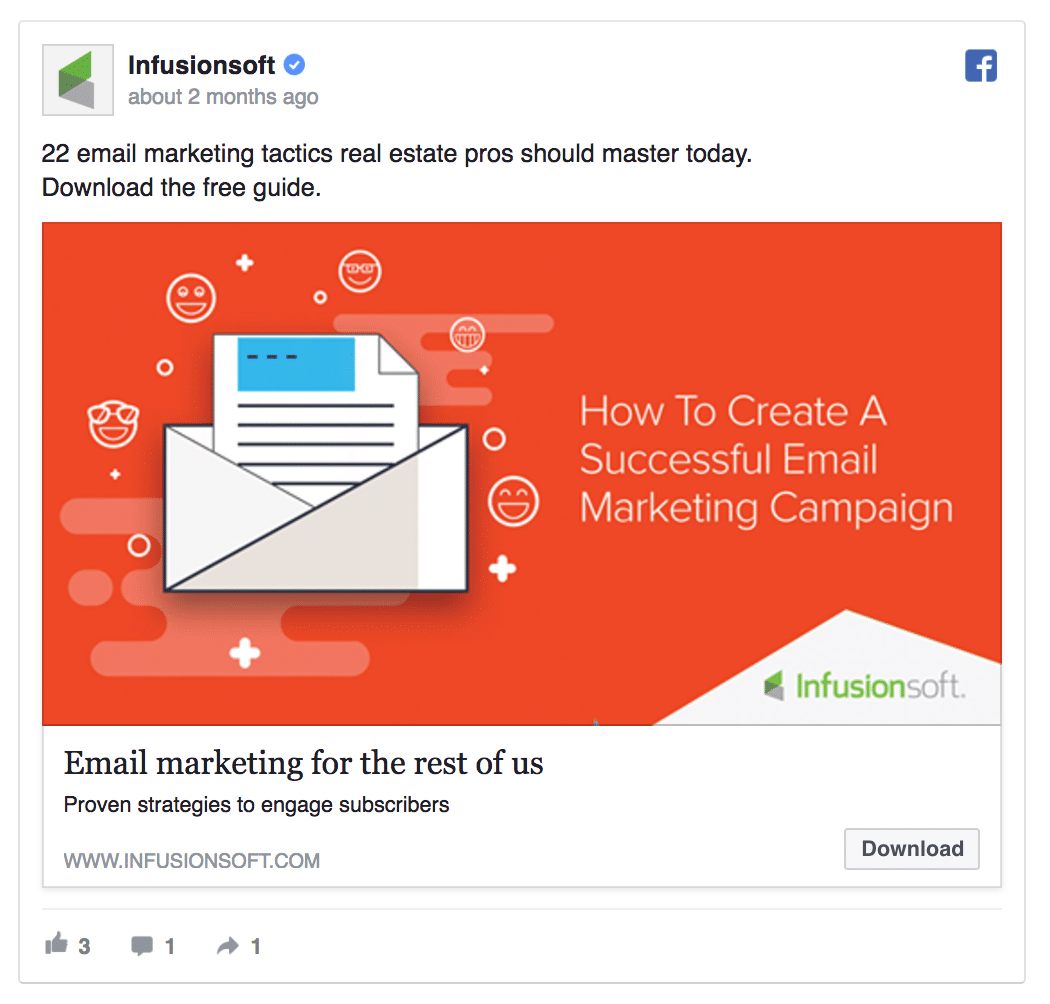
A B2B marketer downloads it, reads it, and hopefully shares it with a colleague. Unfortunately, though, you can’t go for the hard sale. You can’t rush or trick B2B buyers into some impulse buy.
So while you want to transition them into a bigger offer (or commitment), it needs to be a much smaller step, like a training video that goes in-depth on the same subject.

Let’s bring it back to Facebook ads. You’re not using ads to sell. You’re simply using them to get someone from Point A to Point B. And then from Point B to Point C.
Even when it comes time to ‘sell,’ you’re often not actually selling the full-service offering. Going from Facebook Ad to huge retainer is pretty unlikely impossible.
So you come out with a tripwire — a too-good-to-be-true offer — that people can’t resist.
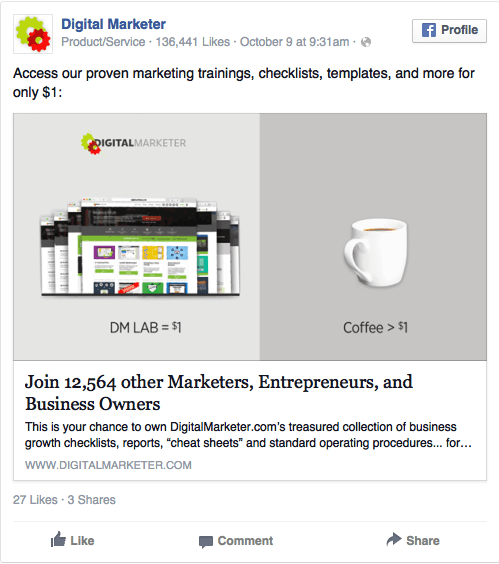
This low-priced, scaled-down offer can help get a B2B buyer’s foot in the door to try you out before committing to a much larger deal down the road.
Broadly speaking, this same type of funnel exists for both B2B and B2C transactions. Both have these ‘micro-conversions’ where people are making smaller commitments that help lead them to making the big one to buy.
But as you’ve seen, the longer B2B sales cycle means there’s an even greater emphasis to break down your own marketing activities into bite-sized chunks that can be consumed over the course of a few months.
Longer sales cycles aren’t the only differentiating factor between the two, however.
Because the amount of money on the line, both in terms of total revenue and deal or order size, also creates a trickle-down effect that dictates which promotional channels you can use successfully. Here’s how.
B2B Companies Can Spend More than B2C to Acquire Each Customer
There is no greater revenue-driver than AdWords. No other marketing channel — online or off — allows you to laser-target customers who type in exactly what they want, when they want it.
That’s why it’s often the first place most marketers start.
But there’s a catch.
Obviously, it’s unlikely that anyone’s going to make a huge purchase through a text ad on a search engine. However, that’s not the point.
This might seem counterintuitive, but the bigger the purchase (like in B2B), the better AdWords can perform.
You often see these “how much does AdWords cost” guides online. Most present some sort of breakdown for Cost Per Clicks (CPC), or what you’re paying to drive visits back to your site.
The confusing thing is that this number doesn’t really matter all that much. What matters is how much money you can make from each customer.
Let’s do some simple math so you can see why.
WordStream’s guide like this says that software clicks might cost around $30/each. That sounds expensive on the surface. Especially if you were to compare it to a much ‘cheaper’ click like a local pool person.
But don’t focus on that number. Focus on what each click gets you in return.
For example, a $30 CPC is nothing if your annual deal size is $30,000. That means you have more than enough wiggle room to drive hundreds of leads, because you only need a few to actually buy to make it worthwhile.
Let’s say you just drove a single customer and spend $3,000 on ads. Is that a good or bad deal?
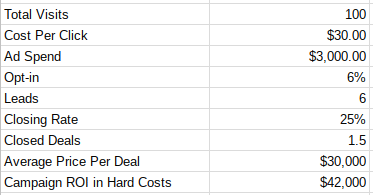
It’s a GREAT deal!
Now, what if your average deal size was only $300. Would spending $3,000 to get one sale be worth it? No, of course not.
That’s why AdWords works wonders for lawyers and insurance and a bunch of other high-priced services, even though the ‘costs’ are always expensive.
But if you sell a $100 product? AdWords might be too cost prohibitive. Let’s say you get a 1% conversion rate on your ecommerce store, and only pay a ~buck or so per click.
Possibly. But you’re cutting it awfully close. You can either:
- Increase your average order value (through an upsell or cross-sell), or
- Increase your conversion rates, or
- Find a new marketing channel!
Larger transactions can take a lot longer to develop. But when they do, you often make a lot more money on each sale. Which means you can afford to invest (spend) more to generate each sale.
This is why B2B companies don’t need to ‘go viral’ on Facebook, but B2C ones often do. B2C companies, as a general rule, can’t spend as much to acquire each individual customer.
So they need to explore other options that will give them exposure to WAY more people, for far less, if they’re ever going to break even and turn a profit.
If you focused purely on advertising channels, this means while B2B companies can happily spend and spend and spend on AdWords, while B2C companies might need to look at Facebook or Instagram or Pinterest, where it might only cost them a few cents (instead of a few hundred) to reach each person.
But wait, there’s more!
B2C companies take pretty much any customer imaginable. As long as they’re not disruptive or annoying. So their Cost Per Leads will pretty equal the cost to acquire each customer.
B2B companies don’t have that luxury. In fact, they willingly spend more, driving up the Cost Per Lead, to make sure they’re not attracting the wrong type of customer.
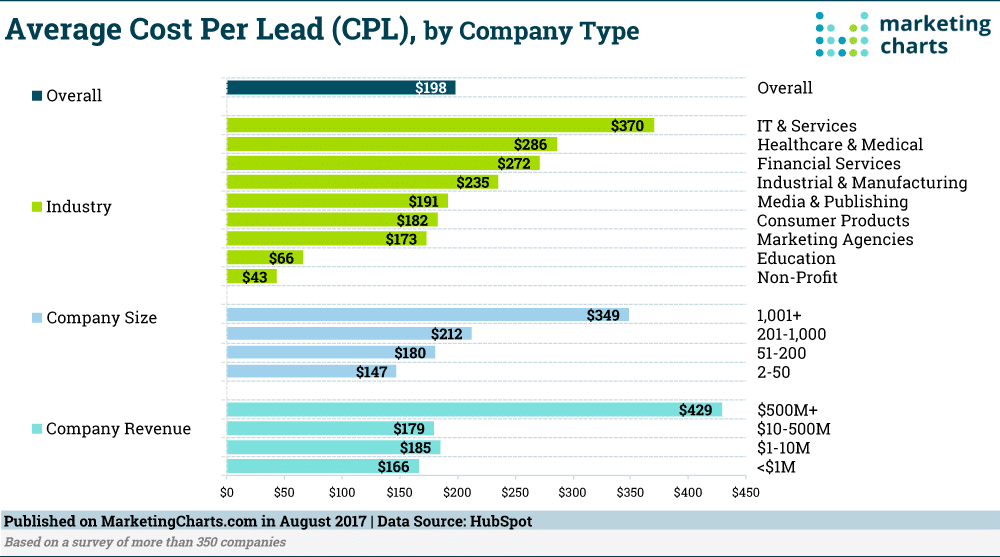
One study says that at least 50% of prospects are not a good fit for what you sell. Half! Imagine a B2C company purposefully not allowing half of their customers to buy. That would never, ever happen.
‘Friction’ can be good or bad in marketing. It often comes in the form of steps or ‘hoop’s people have to jump through before they buy.
And generally speaking, B2C companies want less of it, while B2B companies might be happy with more. That nuance means some tactics are good for one, while not so much for the other.
Case in point: Take chatbots. Should every company be using them? Maybe, maybe not.
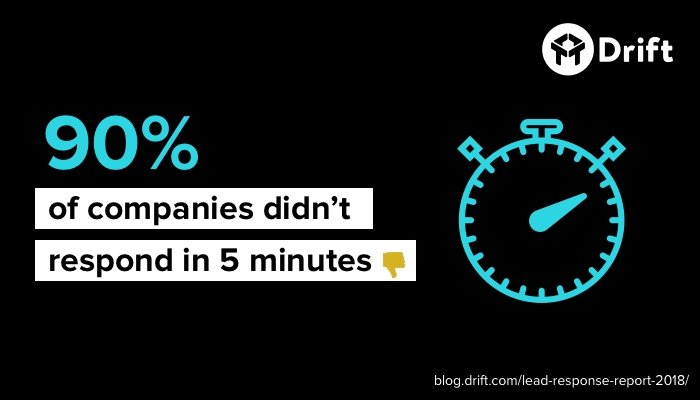
Consumers expect answers within five minutes or less. B2C purchases tend to be more impulsive than B2B ones. That’s why less ‘friction’ usually translates into higher conversions, making it easier or more convenient to purchase and get their product faster. So yeah, that would play into their hands perfectly.
After all, B2C companies make money on volume (as you’ve seen in the last step). They won’t grow unless they constantly have LOTS of customers flowing through their doors each month.
The fact that someone bought last month has zero bearing on new sales for the next one. So they need to be constantly generating new demand, while lowering friction, to make it as easy as possible to purchase.
If a few ‘bad apples’ get through? No big deal. There’s a good chance you’ll never have to hear from them again.
A B2B company, in comparison, might be happy with a few big clients. Especially if those are long-term contracts that automatically repeat month after month.
B2B companies might only need a couple new clients each quarter to grow. So they don’t need volume per se. They need the right ‘fit,’ or partnership that will work well over the course of a year (or longer).
Which means they probably don’t want to respond within five minutes, or give consumers that kind of false expectation for sub-five minute responses in a chatbot.
Instead, marketing automation and lead scoring in your favorite CRM allow them to better handle these longer decisions. They help you set up filters to only allow the good prospects through, while gently letting the ‘bad’ ones down easy.
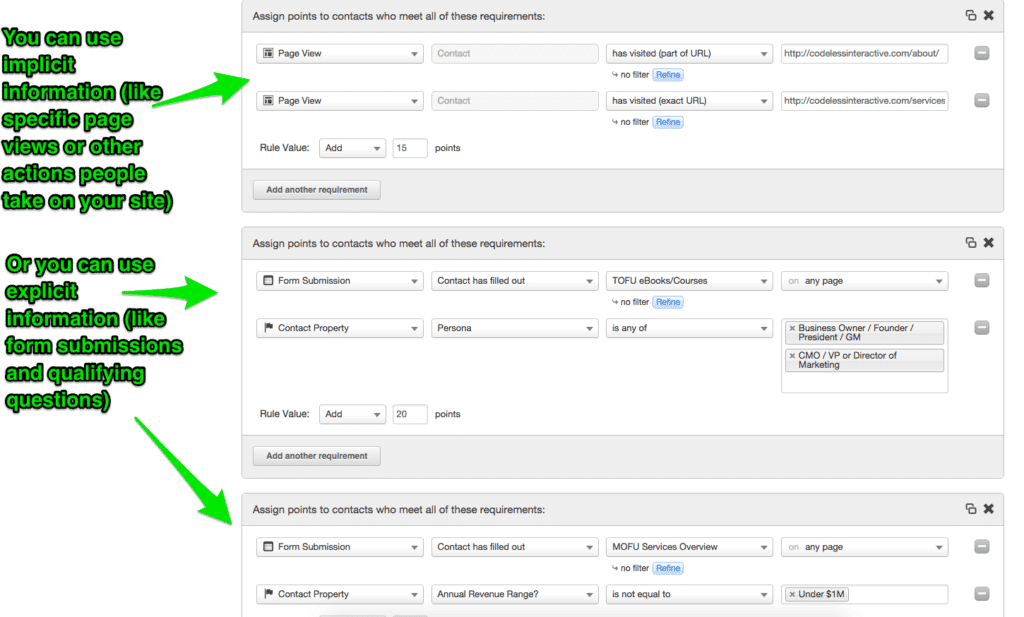
This same argument can even apply to questions between traffic channels, like SEO vs. PPC.
In PPC, you spend $100 to make $150. And then you continually reinvest that profit to eventually grow sales. The only problem is that you often have this fixed relationship between how much you need to spend (on ads) in order to bring in a certain amount of revenue.
SEO, in comparison, compounds.
You might spend $100 today to make $150 tomorrow. But a year from now? You might spend $100 to generate $300. In other words, your level of investment doesn’t necessarily increase in order to generate more money.

Over time, your Cost Per Lead should drop like a rock as the number of visitors takes off. It’s an asset in that sense, one whose return should get better over time the longer it goes.
The catch? It’s going to take longer to ramp up. Ads can fill your funnel tomorrow, but at a much higher price point. While today’s SEO investment should dominate in a year or two from now.
Summary
B2B marketing is very different from B2C marketing. But not exactly in the ways you might think.
The stigma that B2B buyers are “more logical” isn’t always true. Neither is the one about B2C customers being “more emotional.” At the end of the day, customers of all shapes and sizes are both.
However, there are some very real differences between B2B vs B2C marketing.
On average, B2B sales cycles take a lot longer to complete. That means the tactics you use to reach them need to reflect this reality. They need to provide more education and value up front to help all of the various decision makers get on board. And you need a logical progression of micro-conversions to seamlessly lead people from one step to another.
B2B purchases also tend to be a lot more expensive, too. These pricey, long-term engagements mean B2B companies can be more choosey, willingly paying more to acquire each lead to make sure they’ll be the ‘right’ fit. B2C companies, on the other hand, are usually a lot less discerning because they can’t afford to pay as much (or even have to deal with each customer individually much after the initial purchase).
These differences cause a ripple effect through how you use different marketing channels (like AdWords vs. Facebook ads), or even what to expect from each one (like spending more on paid campaigns initially, even at a higher cost, to bide your time until SEO takes off).
The right answer for your business isn’t always black or white. But navigating these differences ahead of time will ultimately give you a better shot at success down the road when it counts.
Have any thoughts about B2B vs B2C marketing? Let us know below in the comments.
Categories
Subscribe Now
10,000 successful online businessmen like to have our content directly delivered to their inbox. Subscribe to our newsletter!Archive Calendar

| Sat | Sun | Mon | Tue | Wed | Thu | Fri |
|---|---|---|---|---|---|---|
| 1 | 2 | |||||
| 3 | 4 | 5 | 6 | 7 | 8 | 9 |
| 10 | 11 | 12 | 13 | 14 | 15 | 16 |
| 17 | 18 | 19 | 20 | 21 | 22 | 23 |
| 24 | 25 | 26 | 27 | 28 | 29 | 30 |
| 31 | ||||||
Recent Articles
-

Posted on : Jul 25
-

Posted on : Jul 07
-

Posted on : Apr 07
-

Posted on : Mar 19
Optimized my.cnf configuration for MySQL 8 (on cPanel/WHM servers)
Tags
- layer 7
- tweak
- kill
- process
- sql
- Knowledge
- vpn
- seo vpn
- wireguard
- webmail
- ddos mitigation
- attack
- ddos
- DMARC
- server load
- Development
- nginx
- php-fpm
- cheap vpn
- Hosting Security
- xampp
- Plesk
- cpulimit
- VPS Hosting
- smtp
- smtp relay
- exim
- Comparison
- cpu
- WHM
- mariadb
- encryption
- sysstat
- optimize
- Link Building
- apache
- centos
- Small Business
- VPS
- Error
- SSD Hosting
- Networking
- optimization
- DNS
- mysql
- ubuntu
- Linux